

Announcing Outbound Data Transfer Limits
Beginning April 7th, Replit will begin enforcing limits on the amount of outbound data that developers can transmit from their Repls to users and external services. Inbound data transfer is free.

Beginning April 7th, Replit will begin enforcing limits on the amount of outbound data that developers can transmit from their Repls to users and external services. Inbound data transfer is free.


Last week we announced the Pro plan to speed up your development with Replit's AI tools and an even more powerful Workspace.


Replit x Weights & Biases Machine Learning Hackathon Winners


Apply for Replit’s first Machine Learning Hackathon


In August last year, we announced Repl Identity, a signed identity for every Repl that your code can use to authenticate other Repls when communicating with your APIs and services.



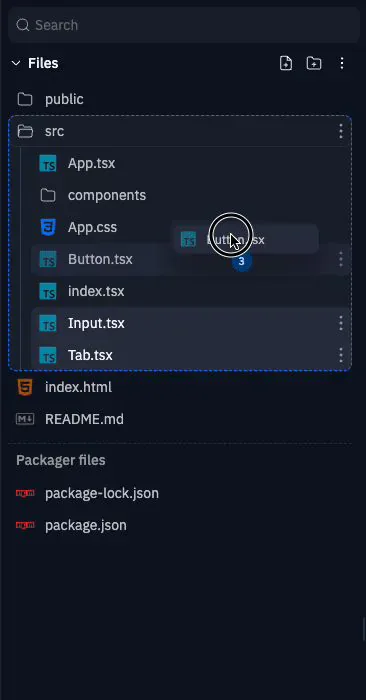
The filetree is a central surface of the workspace which has long been under-leveraged to support the workflows of users. As part of our ongoing workspace revamp, we're shipping improvements to make the filetree more usable and powerful. These improvements include:






In our previous blog post about Worldwide Repls, we talked about how we revamped part of our infrastructure to build a new abstraction that allowed us to build other components on top of it: the control plane. In this entry, we'll talk about the very first thing we built on top: a load balancer.



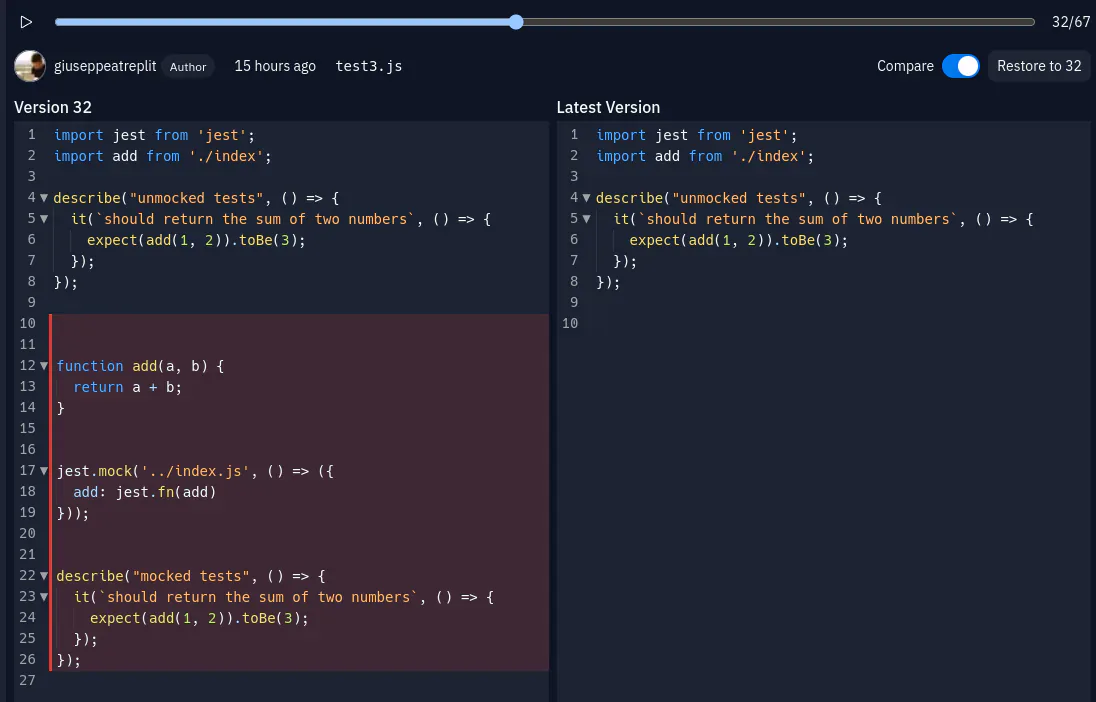
Have you ever had to start over on a piece of code because you overwrote something by accident? Made an edit, replaced it, and then wished you could go back?


Picture this: you've built an arcade game on Replit. Gamers playing your game will head to the repl's cover page and click "Run". They love your game, and they send you feature requests and ideas in the comments. Now, you want to keep track of high scores and add other social features to your game. This used to be a show-stopper: there was no way to verify the API requests coming in, so your high-score feature was either easy to spoof, or simply didn't get off the ground.


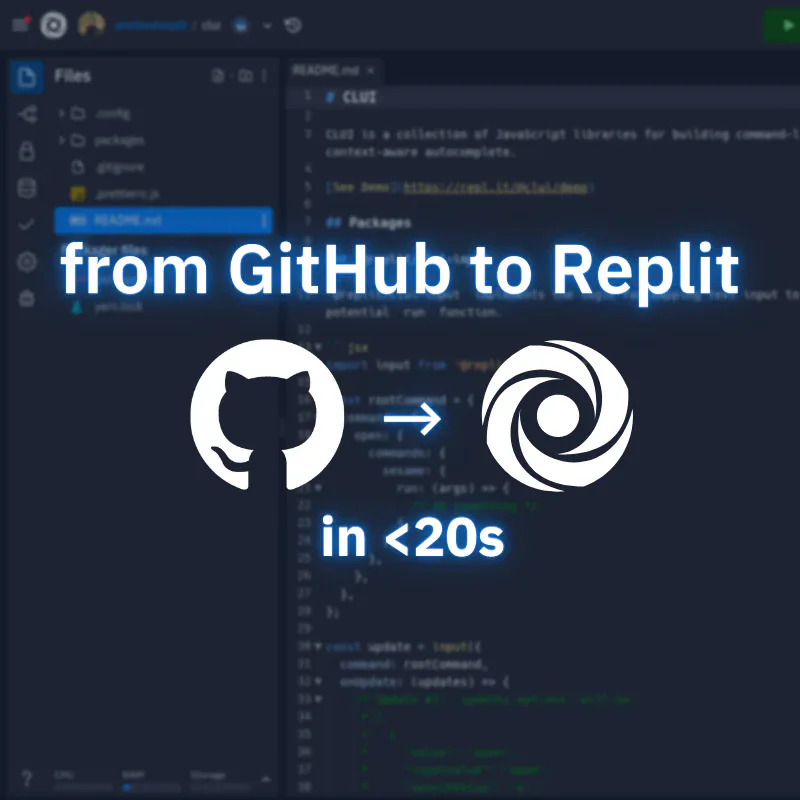
Early last year, we made the announcement that our infrastructure and Repls now had Nix baked in. Just a few months ago, we announced all new Repls would be Nix-based. And today, we're happy to announce that our GitHub imports flow is now also powered by Nix!

We recently launched a new Replit-native way to inspect and debug web pages you build on Replit. Whether you're learning the basics or hosting a rich application, quickly being able to inspect the console and DOM is critical to your workflow.


Building a robust and powerful UI without compromising on simplicity is complicated, and we're always exploring solutions that alleviate that problem. A few years ago, we rewrote our workspace architecture, and Amjad gave a talk about it. We're about to add a lot of firepower to our layout system (stay tuned!), but we noticed significant shortcomings in our abstractions. This blog post will outline the flaws and how the underlying data structure hurt the interactions. To keep this post concise, I will defer the reasoning behind the UI and UX to a future post.

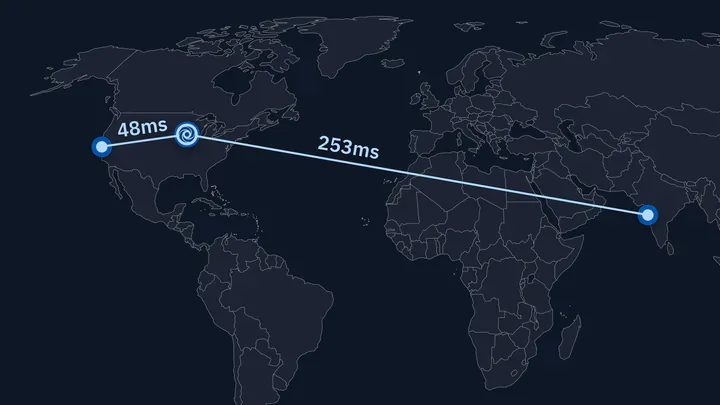
During the ReplCon 2022 keynote, we announced that we were going to geo-distribute our infrastructure so that your Repls are much faster when accessed outside of the United States. The speed of electrons / light in a medium is a fundamental speed limit. Most of our users are several thousand kilometers away from the data centers where we host Repls (currently limited to the United States), so the round trip from them to the users' homes is going to necessarily take several hundred milliseconds just to traverse the series of tubes that is the Internet. Today, we have finished the first milestone to make this a reality, and that comes with some pretty neat side-effects!

For some time now, it's been possible to link your custom domain to your Repl. You buy that perfect domain name, connect it to your website hosted on Replit, and you're good to go! Custom domains help you create a unique home on the internet - for your blog, a product you're launching, or just a space to try new ideas.

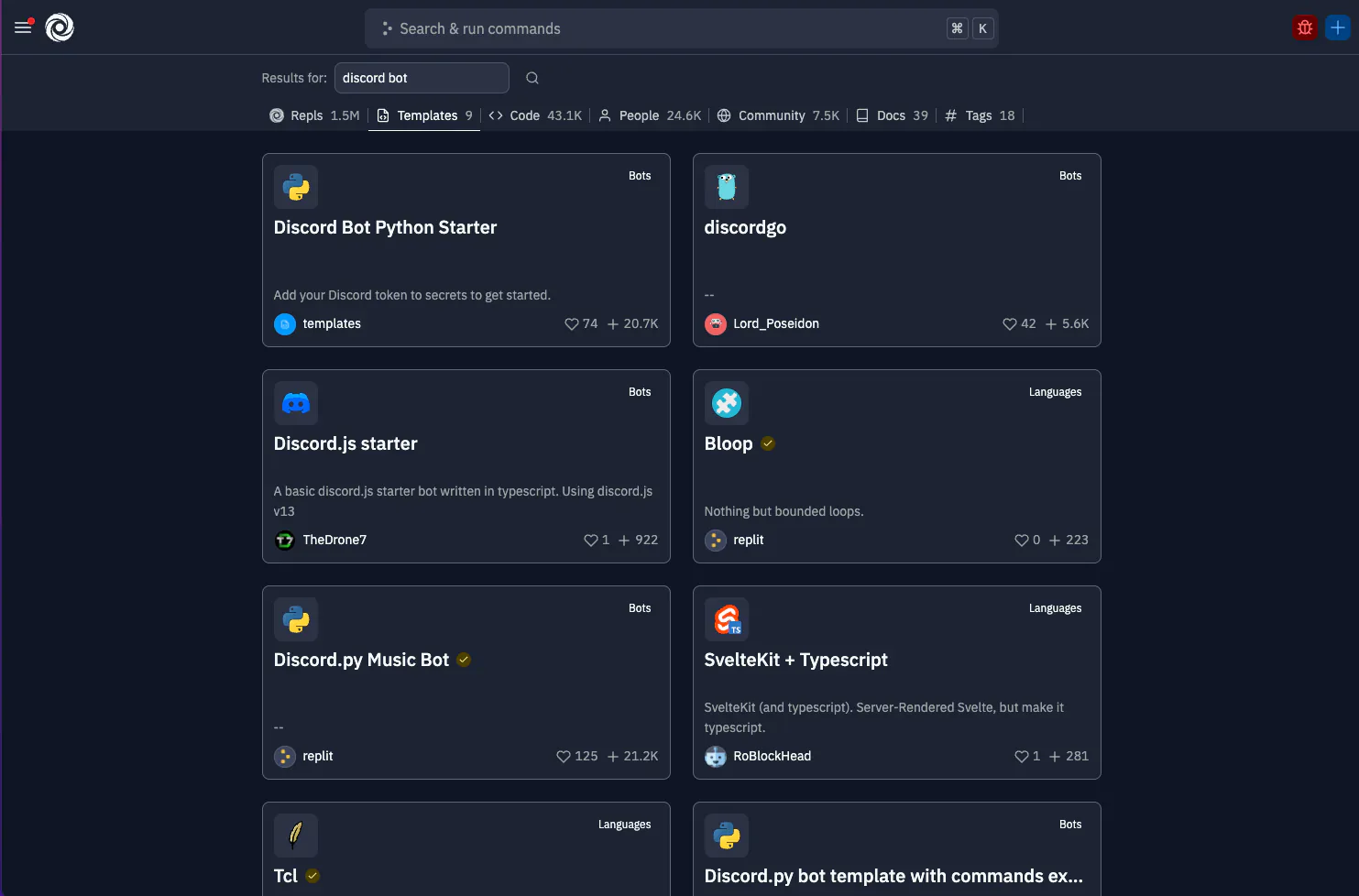
For the past few months, we have been building a Replit-native search engine. It is remarkably powerful, and we are really excited for you all to try it out. We believe that you should be able to find anything on Replit in less than 30 seconds.




You may have heard that there was a very critical Linux kernel vulnerability making the rounds. As with all important enough vulnerabilities, this one has a catchy name: Dirty Pipe (no logo, though). This blogpost attempts to explain how that vulnerability impacted Replit. The good news is that as far as we know, there weren't any successful exploitations of it!


At Replit, our mission is to bring the next billion software creators online. In order to achieve that ambitious goal, we need to make sure that the experience of writing, running, and sharing code is as seamless as possible. At the heart of that experience is the editor itself. As a result, we dedicate a huge amount of time and energy to improving the stability, performance, and accessibility of our editor.



For the past year we have been working hard to integrate Nix into our platform and rebuild our existing language experiences with package from Nix. We are excited to announce that all new repls are now powered by Nix. In this post we'll talk about what this means for the future of the platform and all the work that it took to get here.


Replit is your computer — for whatever you need to do. We announced last year that Hackers would be able to have their hosted apps be able to persist file changes since that made it possible to build a lot more apps. But we were not quite satisfied that only Hackers were going to get this new feature.

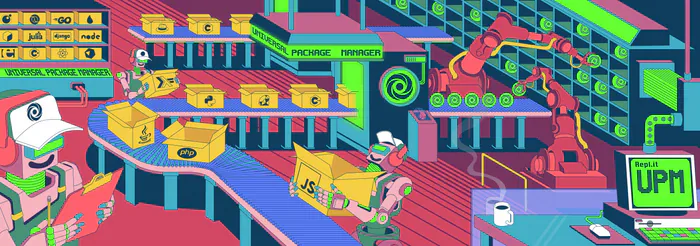
Python is currently the world's (and Replit's) most popular programming language. We've improved the Python experience during last year, with a Python package cache to make installs faster, and an integrated, multiplayer debugger to increase the understanding of what programs do. But there are still a few problems with Python. Packages are often very space-consuming, so they are installed into an ephemeral 2 GiB scratch disk to avoid filling up repl directories. Unfortunately this means that every time a Python repl starts, a lengthy package installation process must happen. This makes some Python repls take forever to start! Some other packages that have a large number of dependencies (like TensorFlow and Torch) were completely unusable because they don't even fit on the scratch directory.
No matching posts.